
Winter Safety Tips for Seniors: Helping Loved Ones Stay Safe, Warm, and Connected
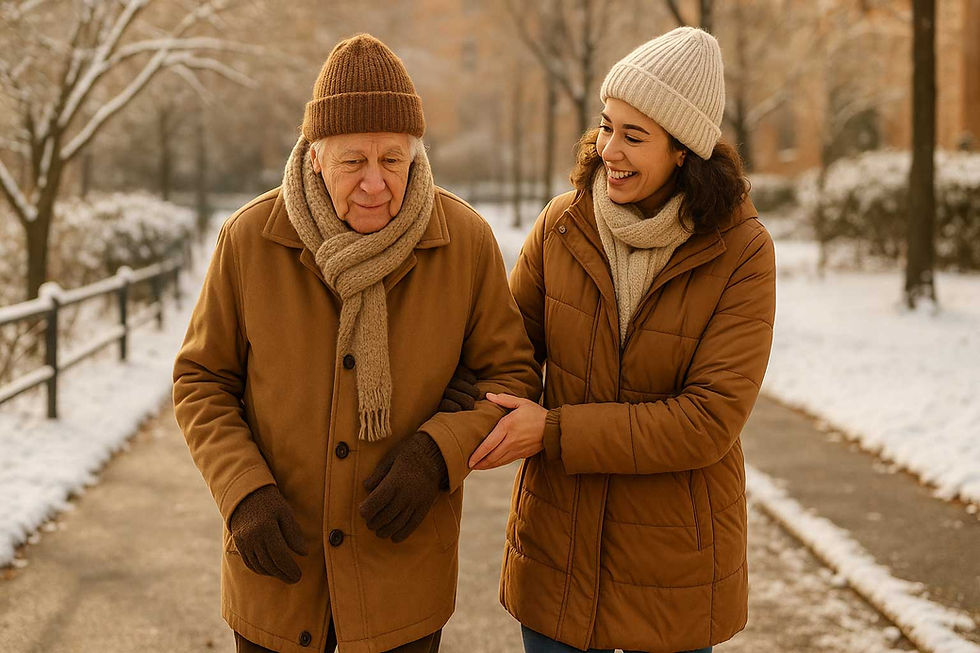
Winter in New York brings challenges that can be especially difficult for older adults. Ice-covered sidewalks, freezing temperatures, darker evenings, and long stretches indoors all create conditions that increase risk for seniors. Families often focus on summer heat, but winter requires just as much attention. With the right preparation and compassionate in-home support, seniors can stay safe, warm, and connected throughout the season.
Why Winter Poses Extra Risks for Seniors
Cold weather affects older adults differently. Balance and mobility can be impacted by stiff joints or slower reflexes, and chronic conditions may worsen when temperatures drop. Even simple errands, such as walking outside to check the mail, become riskier once snow and ice arrive in Queens, Nassau County, and surrounding New York City neighborhoods.
Shorter days and reduced sunlight can also contribute to fatigue, lower mood, and feelings of isolation. When seniors spend more time indoors, they may withdraw socially without realizing it, which increases emotional and physical risks.
Preventing Slip and Fall Accidents
Slip and fall injuries are among the most common winter-related emergencies for seniors. Many of these accidents are preventable with a few practical steps.
Keep walkways, steps, and driveways cleared and salted.
Use shoes or boots with non-slip soles for stable footing.
Improve lighting near entrances and hallways to reduce missed steps.
Install handrails and grab bars in areas where balance may be a challenge.
Place non-slip mats near doorways where melted snow can make floors slick.
These adjustments help protect independence, mobility, and confidence during the winter months.
Keeping Seniors Warm Safely
Warmth is essential for senior health. Older adults can experience hypothermia more quickly, even indoors, especially if they keep the heat low to save on utility bills.
Helpful strategies include:
Layering clothing for adjustable warmth.
Ensuring the thermostat is set to a safe and comfortable temperature.
Checking that heating systems are functioning properly.
Avoiding unsafe heating sources such as ovens or outdated space heaters.
Regular check-ins help confirm that seniors are warm enough and not experiencing early signs of cold-related illness.
Medication, Nutrition, and Hydration Support
Winter disrupts routines for many older adults. They may skip meals, forget medications, or drink less water without meaning to.
Caregivers and family members can help by:
Keeping medication schedules organized and consistent.
Preparing warm meals that support energy and immune health.
Encouraging hydration, since dry indoor air increases dehydration.
Small adjustments help seniors maintain steady routines and better overall health.
The Importance of Checking In
Winter can be isolating, particularly for seniors who spend more time indoors. Regular contact helps maintain emotional well-being and offers families peace of mind.
Check on aging loved ones:
After storms or icy conditions.
During sudden temperature drops.
If communication has been quiet for longer than expected.
A quick visit or phone call can prevent avoidable emergencies and provide comfort.
When Extra Support Makes a Difference
Some seniors need more assistance during the colder months. Help with mobility, warmth, meals, medication reminders, and companionship can make winter feel safer and more manageable.
Passion for Seniors of NY provides dependable, compassionate support that helps seniors remain independent while staying safe in their homes across New York City and Nassau County.
Want to make sure your loved one stays safe this winter?
Call (718) 850-3400 or contact us online to learn how Passion for Seniors of NY can provide reliable, compassionate in-home care.
FAQs
What are the biggest winter risks for seniors?
Falls, cold-related illness, and isolation are the main concerns. Ice, snow, and freezing temperatures create hazards, but simple precautions help reduce these risks.
How can families keep seniors safe during winter?
Clear walkways, maintain warm indoor temperatures, encourage proper clothing, organize medications, and schedule regular visits or calls.
Do seniors need extra help during cold weather?
Many benefit from additional support. In-home caregivers assist with mobility, warmth, nutrition, safety, and companionship, which helps seniors feel secure and supported.


Comments